Sub-Total: $0.00






6 Signs of a Moisture-Damaged Subfloor
Detect signs of moisture damage on your subfloor before it gets worse. Learn what causes moisture to get trapped in your floor system and how you can prevent significant damage to your property. Explore top-notch flooring solutions in Dallas from All American Flooring.
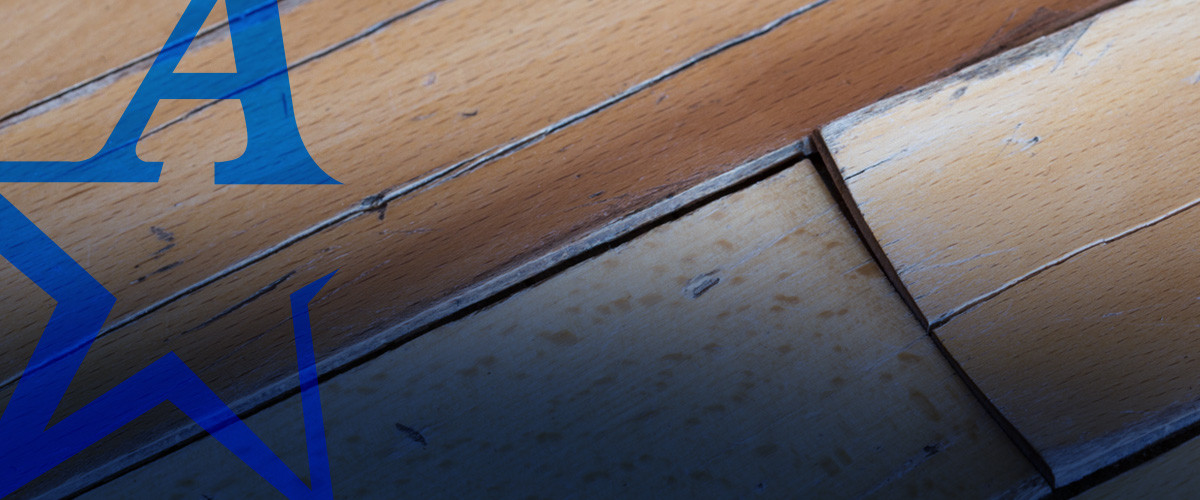
Is Your Subfloor Secretly Suffering?
A subfloor is the structural layer that lies directly on top of the floor joists. It serves as the foundation of your main flooring and supports the weight of the underlayment and the finished surface. Common types of subfloors include concrete, plywood, oriented strand board and original floorboards.
Subfloors can be damaged in various ways, including excess moisture. This happens when water seeps in from external sources, such as plumbing leaks, poor drainage or humidity, and penetrates the flooring material. A subfloor damaged by moisture can lead to costly repairs and health hazards if not addressed promptly. Early detection is key to resolving issues before they cause further damage. Below are six signs of a moisture-damaged subfloor:
1. Musty Odors
Do you notice a stale or damp, earthy smell in your property? That distinct, musty odor is one of the most obvious signs of mold or mildew presence. It’s usually an unpleasant smell that won’t go away with regular cleaning or the use of air fresheners.
Musty odors can be caused by trapped moisture in the inner layers of your flooring, as well as other areas of the house. The smell develops when mold and mildew release microbial volatile organic compounds (MVOCs) from feeding on organic materials, like a damp subfloor. These MVOCs can cause health problems, such as headache, nausea and dizziness.
- How to find the source: Pinpoint the spot where the smell of rotting wood or a persistent pungent odor is strongest. Check for visible signs of moisture, such as water stains, damp patches or white powdery deposits.
- When to call a professional: If the damage is extensive or you’re unable to locate the source, call a professional for proper inspection.
2. Discoloration
A moisture-damaged subfloor can exhibit signs of discoloration. Common types include:
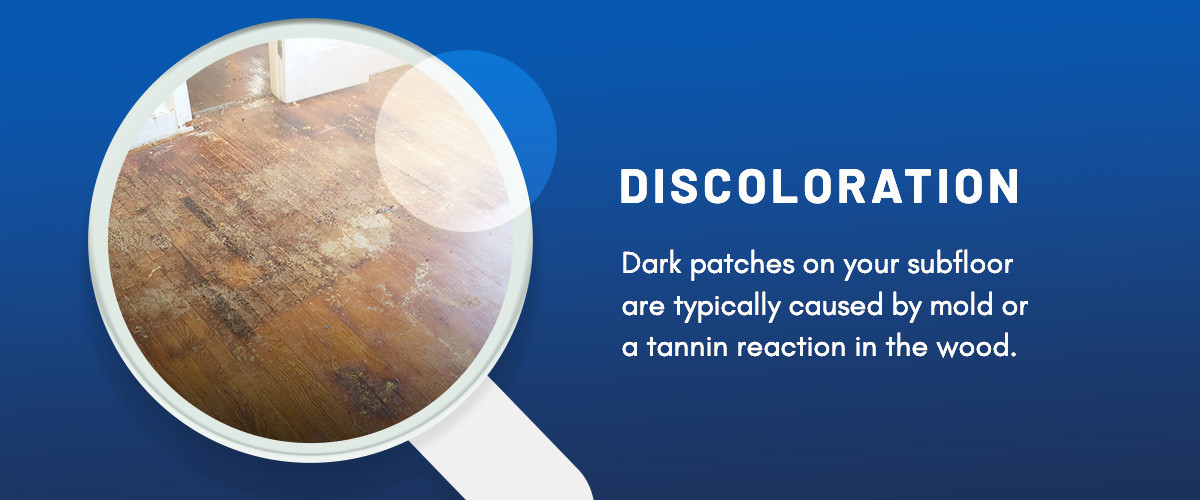
- Dark or black: Dark patches on your subfloor are typically caused by mold or a tannin reaction in the wood.
- Yellowish-brown: Water “rings” in yellowish-brown color on hardwood or laminate could be due to moisture trapped under the flooring, or rusty metal fasteners and foreign components in the subfloor.
- White or chalky: Powder-like mineral deposits called efflorescence on the subfloor are residue when moisture moves through porous materials and then evaporates.
- Faded or bleached: The dulling or fading of the floor can be caused by prolonged exposure to moisture.
- Discolored grout: Water damage in tiled floors can cause the grout to darken or become discolored.
Discolorations on the subfloor are not symptoms you can ignore. If left unattended, they can significantly weaken the subfloor and hamper its ability to support the floor layers above it.
- How to find the source: The location of the stain is a major indicator of the moisture. Inspect for visible damage and check for potential sources, such as plumbing issues or appliance leaks.
- When to call a professional: Any unexplained discoloration is a red flag. If it persists, consult a professional for a proper assessment that can’t be done by visual inspection alone.
3. Mold and Mildew
Molds are splotchy, fuzzy or slimy patches in black or greenish color that appear on surfaces, while mildew is a white or grayish substance that looks like powder. They thrive in damp, warm and dark environments, which makes a moisture-damaged subfloor the perfect breeding ground.
Molds produce allergens that can cause irritation, allergic reactions or lung infections in immunocompromised individuals. While it’s tempting to remove molds right away, it’s best not to wipe or scrub them yourself. Disturbing a mold colony can release millions of tiny spores into the air, causing them to spread to other parts of the property.
- How to find the source: Identify the source of musty odor and inspect vulnerable areas, like bathtubs, sinks, toilets, appliances and crawlspaces, for signs of moisture.
- When to call a professional: Beware of black mold and handle it with caution. Contact a professional for an accurate diagnosis and assistance with mold removal.
4. Soft or Spongy Spots
Soft, bouncy spots in certain areas of the floor that “give” when you walk are a sign of a water-damaged subfloor. It can be accompanied by squeaking or creaking sounds from weakened or rotting wood fibers due to high humidity, leaks or spills.
A spongy floor indicates advanced decay, meaning your flooring is losing its structural integrity. It’s a safety hazard, and when this happens, it’s best to avoid walking on it, as the floor could give way under heavy weight.
- How to find the source: Dry the spot immediately and look for persistent leaks nearby.
- When to call a professional: A spongy floor calls for a significant repair. Consult a professional for immediate assessment and possible flooring installation service to ensure safety.
5. Squeaking Floors
Moisture can cause your subfloor to absorb water and swell, leading to expansion and contraction as it dries. This constant movement loosens the nails and fasteners that hold your flooring system together, causing the wood to rub against a nail shaft or an adjacent board and produce a squeaking sound.
While a single squeak can be common, new or widespread squeaking indicates a compromised subfloor. It signifies instability that is likely due to moisture-related warping, cupping or buckling.
- How to find the source: Listen for squeaking sounds and try using shims for minor issues.
- When to call a professional: Widespread or worsening sounds on your floor, especially when accompanied by other signs of moisture, call for expert evaluation.
6. Warped Floorboards
Like squeaking floors, warped floorboards are also caused by the expansion of wet wood. Different types of warping include:
- Cupping, where the edges of the floorboard are raised higher
- Crowning, where the center bulges upward
- Buckling, where moisture creates a “tent” or wave effect on the floorboard
Warped floorboards can be tripping hazards and signal serious damage to the floor system. While a single cupped floorboard can be easily fixed, extensive warping requires major repairs.
- How to find the source: The moisture source is almost always located directly below the damaged area. Improve ventilation to eliminate dampness and prevent warping.
- When to call a professional: For widespread warping, schedule a professional service to address the root cause and prevent permanent damage.
Replace Moisture-Damaged Floors With All American Flooring

Signs of subfloor damage are often visible, allowing property owners to easily identify issues and initiate the necessary repairs. Prompt action is crucial to early detection and resolution, helping you prevent significant damage that may require costly repairs or replacement. Using high-quality flooring with excellent water resistance also helps avoid moisture damage.
All American Flooring offers premium-quality flooring solutions and installation services. Backed by 35 years of experience, we serve residential and commercial properties in the Dallas-Fort Worth Metroplex, including Allen, Dallas, Lewisville and Wylie. Replace your moisture-damaged subfloor with top-quality flooring. Contact our team to schedule a free in-home estimate and learn more about our 110% unbeatable price guarantee and double installation warranty.