Sub-Total: $0.00



Best Flooring for Big Dogs: The DFW Homeowner’s Guide to Scratch-Proof & Waterproof Surfaces
If you have a big dog, you already know that flooring gets tested every day.
Large dogs bring plenty of personality into a home, but they also bring muddy paws, spilled water, shedding, long nails, and the occasional sprint through the living room. A 70-pound Golden Retriever, German Shepherd, or Labrador can put considerably more wear on a floor than a quiet household with little foot traffic.
DFW homeowners have another factor to consider. North Texas homes can be affected by expansive clay soils, seasonal moisture changes, and concrete slab conditions. That makes proper flooring installation just as important as choosing the right material.
At All American Flooring, we help homeowners throughout the Dallas–Fort Worth area find flooring that fits the way they actually live. If you have one or more large dogs, here are three flooring options worth considering, along with what to look for before you make a decision.
What Makes Large Dogs Hard on Flooring?
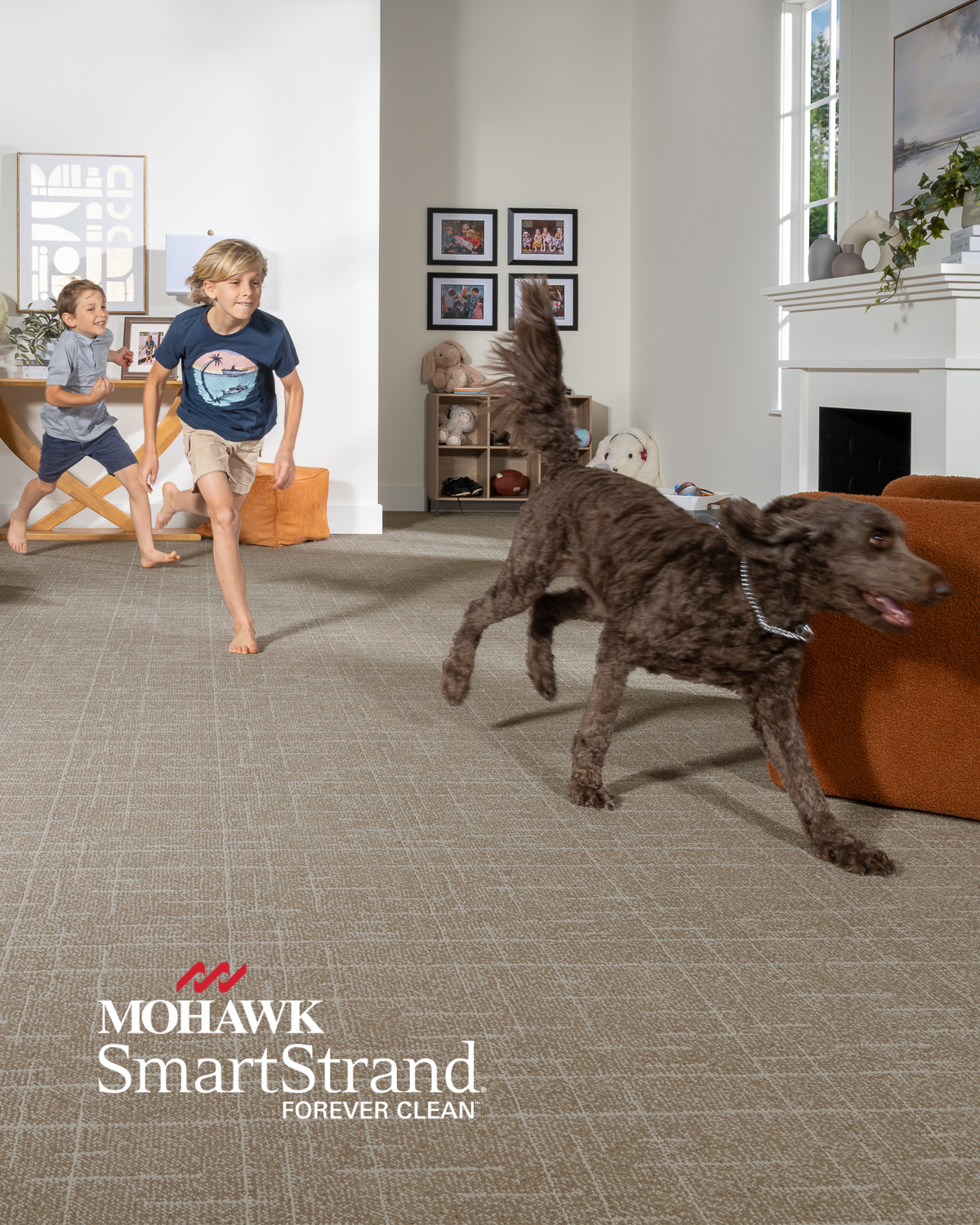
Your dog’s weight isn’t the only concern. When a large dog runs, stops suddenly, or turns on a hard surface, pressure is concentrated around its paws and nails. Over time, that repeated movement can leave scratches or scuffs, especially on softer wood and smooth finishes.
Then there’s moisture. Water bowls get tipped. Dogs walk inside with wet paws after a storm. Mud gets tracked across the entryway. If moisture reaches flooring that isn’t designed to handle it, problems can develop around seams, edges, and underneath the surface.
For that reason, two things should be high on your list when shopping for flooring: how well it handles everyday wear and how it responds to moisture.
1. Luxury Vinyl Plank and Rigid-Core SPC
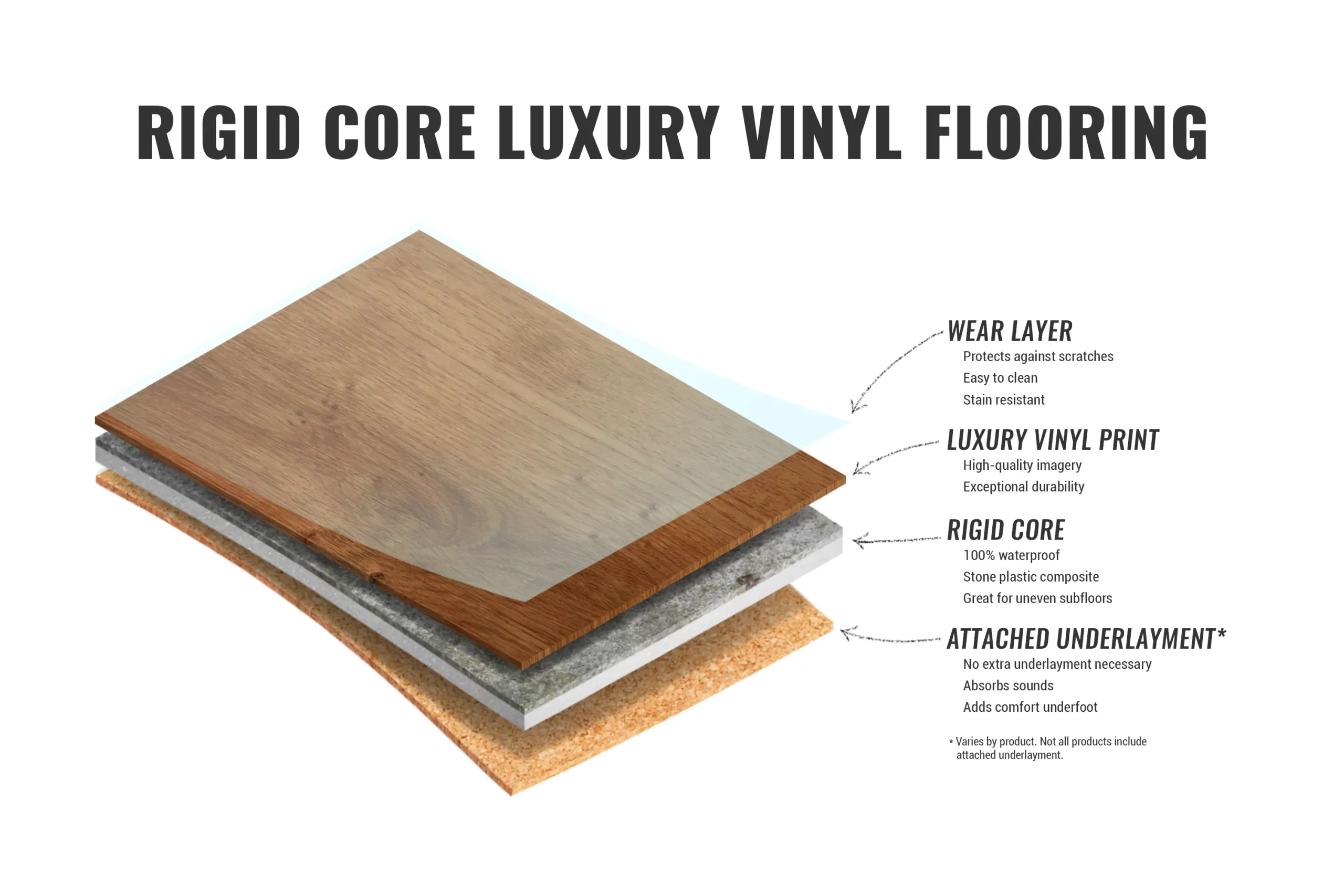
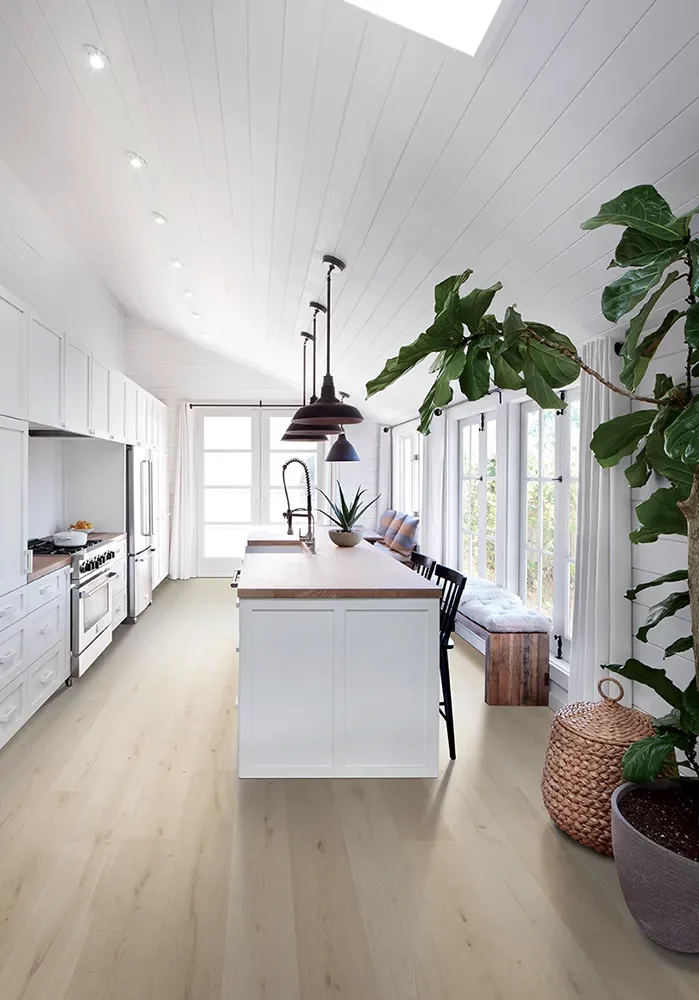
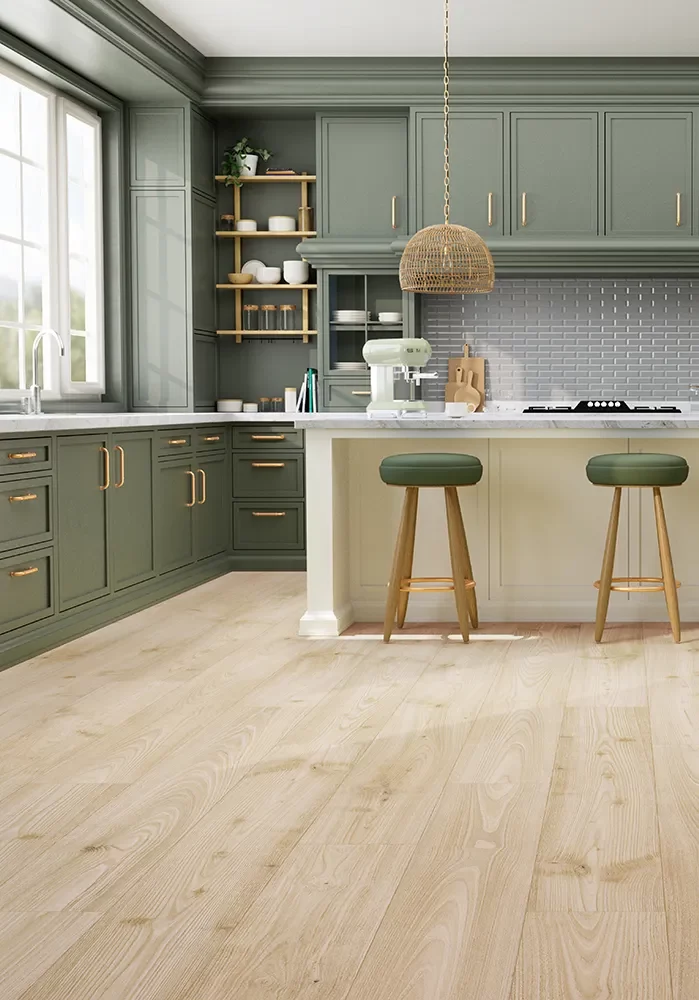
For many households with large dogs, luxury vinyl plank is a practical place to start. Rigid-core SPC flooring has a dense core and is available in a wide variety of wood-look styles. It can give you the appearance of hardwood without requiring the same level of maintenance.
The important thing is to look beyond the color and pattern, the wear layer is the clear protective layer on the surface of the flooring. A thicker wear layer generally provides better protection against everyday wear.
For an active household with a large dog, a 20-mil wear layer is a specification worth looking for, particularly in areas that receive heavy traffic.
Some products also use ceramic bead or aluminum oxide reinforcement to improve resistance to wear. LVP isn’t completely scratch-proof, but a quality product with a substantial wear layer can handle normal pet traffic very well.
Water Resistance
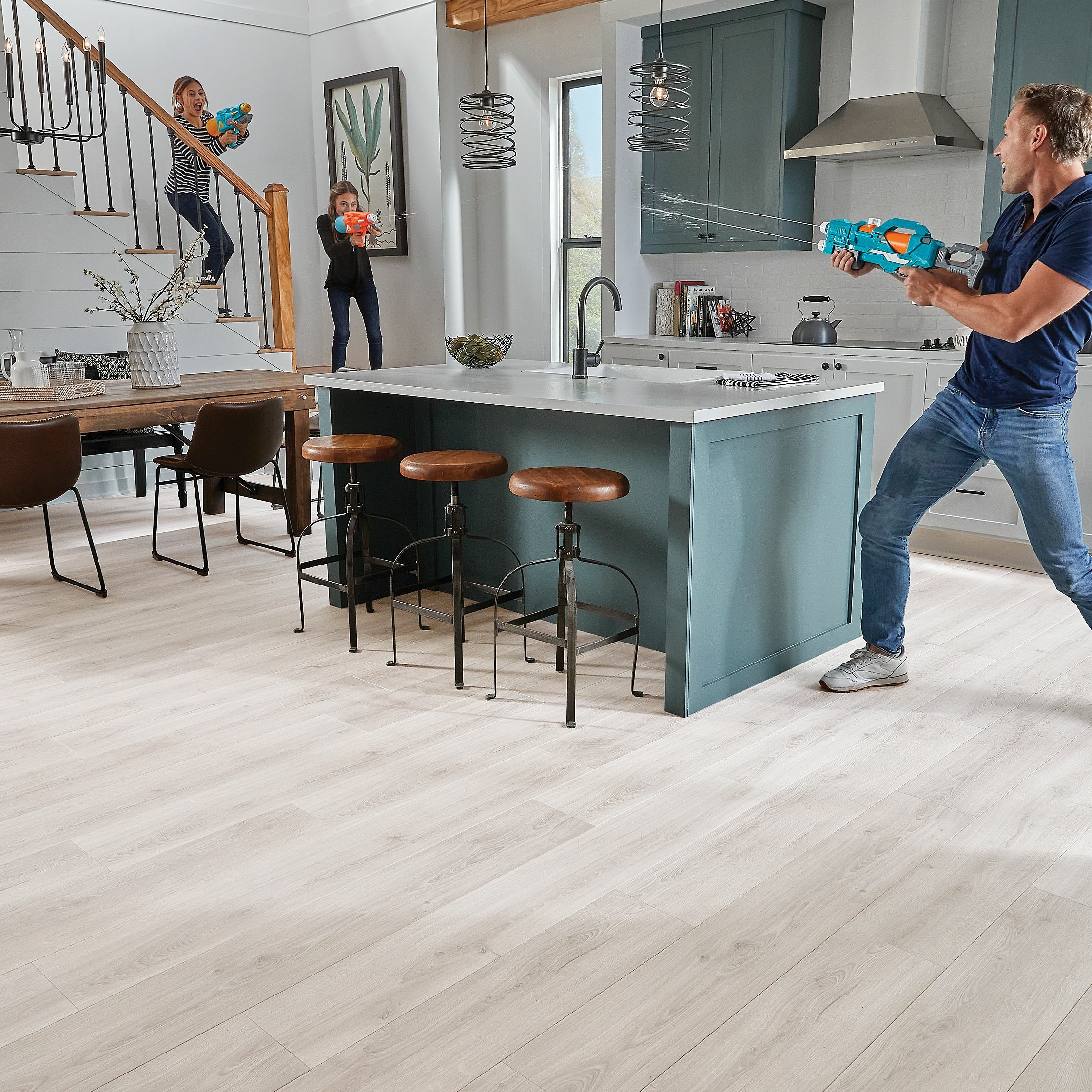
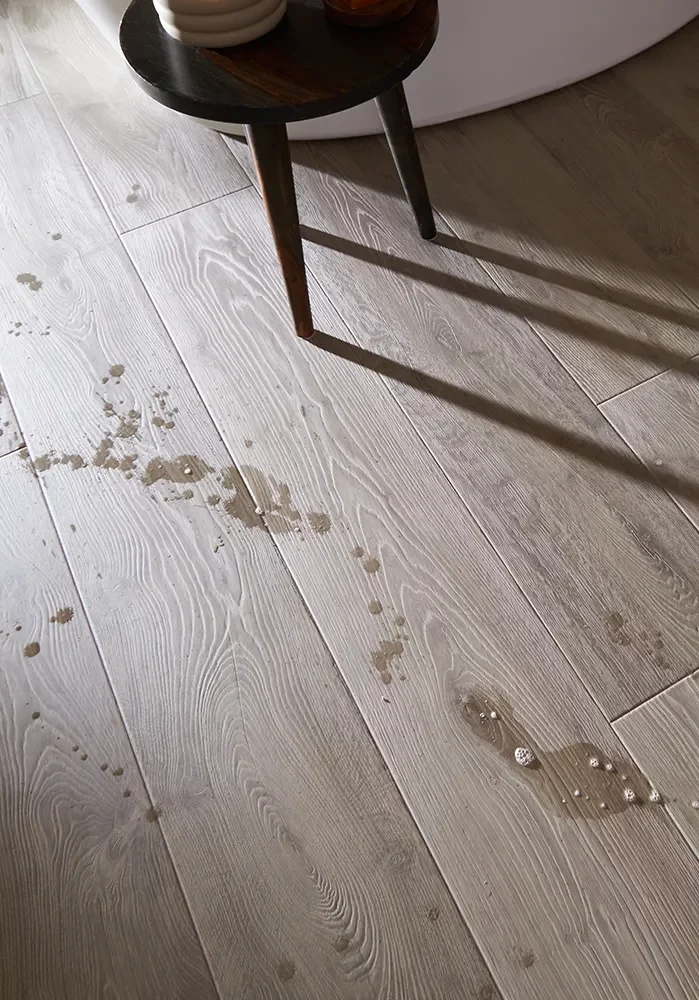
This is one of the biggest advantages of rigid-core vinyl. Many SPC products are designed to resist water, making them a popular choice for kitchens, hallways, living rooms, mudrooms, and other areas where spills are likely.
You shouldstill clean up standing water and pet accidents promptly. The flooring may be highly water-resistant, but the installation still matters. Seams, transitions, edges, and the subfloor all need to be properly addressed.
What AboutDog Nail Noise?
Hard floors can make the sound of dog nails surprisingly noticeable. Some LVP systems include acoustic underlayment that helps reduce the noise. It won’t make the room silent, but it can create a softer, less hollow sound than some other hard surfaces.
Where Does LVP Work Well?
LVP and SPC are particularly practical for busy families who want easy cleanup and don’t want to spend a lot of time worrying about everyday wear. They’re worth considering for homes throughout Frisco, Prosper, McKinney, Allen, Southlake, and other growing DFW communities.
2. Wire-Brushed Engineered Hardwood
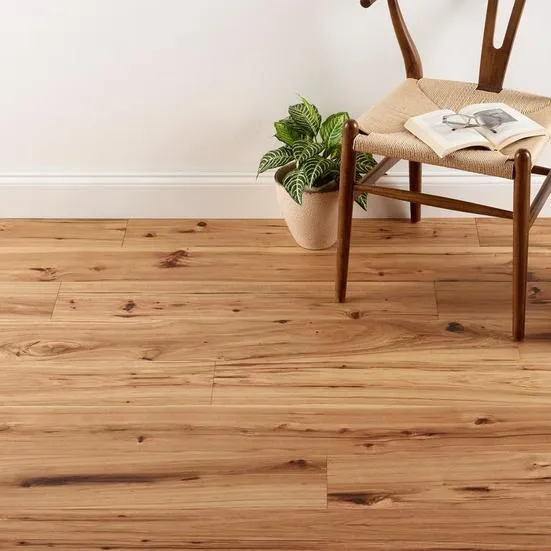
Not everyone wants vinyl flooring. If real wood is important to you, there are ways to make hardwood more practical for a home with a large dog.
The biggest mistake is assuming that all hardwood floors will perform the same way. A smooth, darkfloor with a high-gloss finish can make scratches and scuffs stand out. A wire-brushed surface with a matte finish is much more forgiving.
Why Wire-Brushed Wood Works
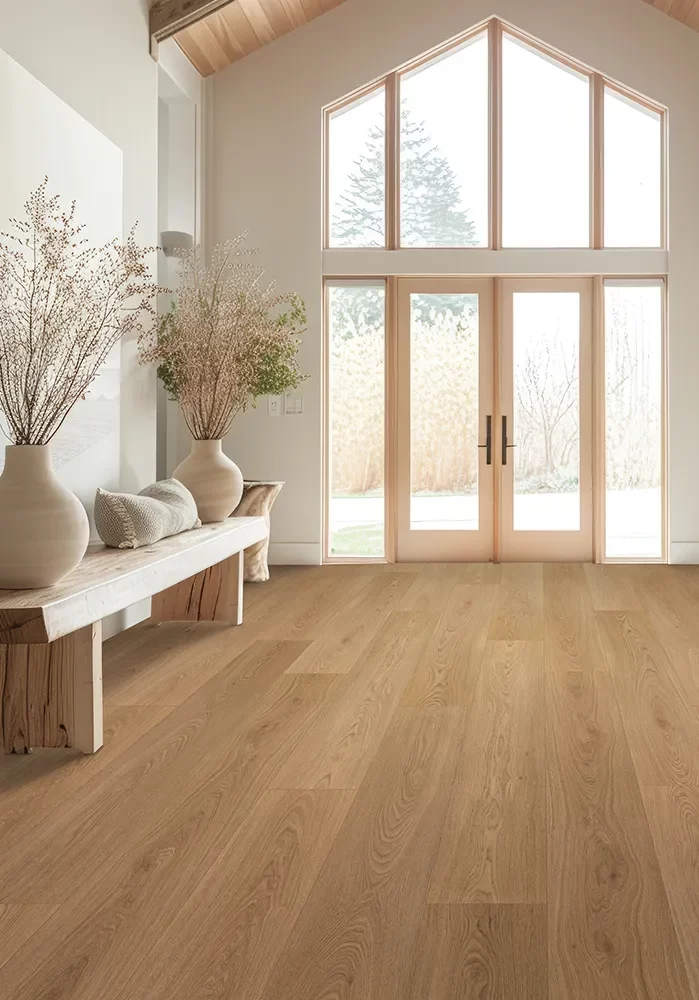
Wire brushing removes some of the softer fibers from the surface of the wood and emphasizes the natural grain.The result is a floor with subtle texture and variation. Small scratches don’t necessarily disappear, but they’re less obvious because they become part of an already textured surface. That’s a useful quality in a home where a dog is running across the floor every day.
Choose a Durable Wood Species
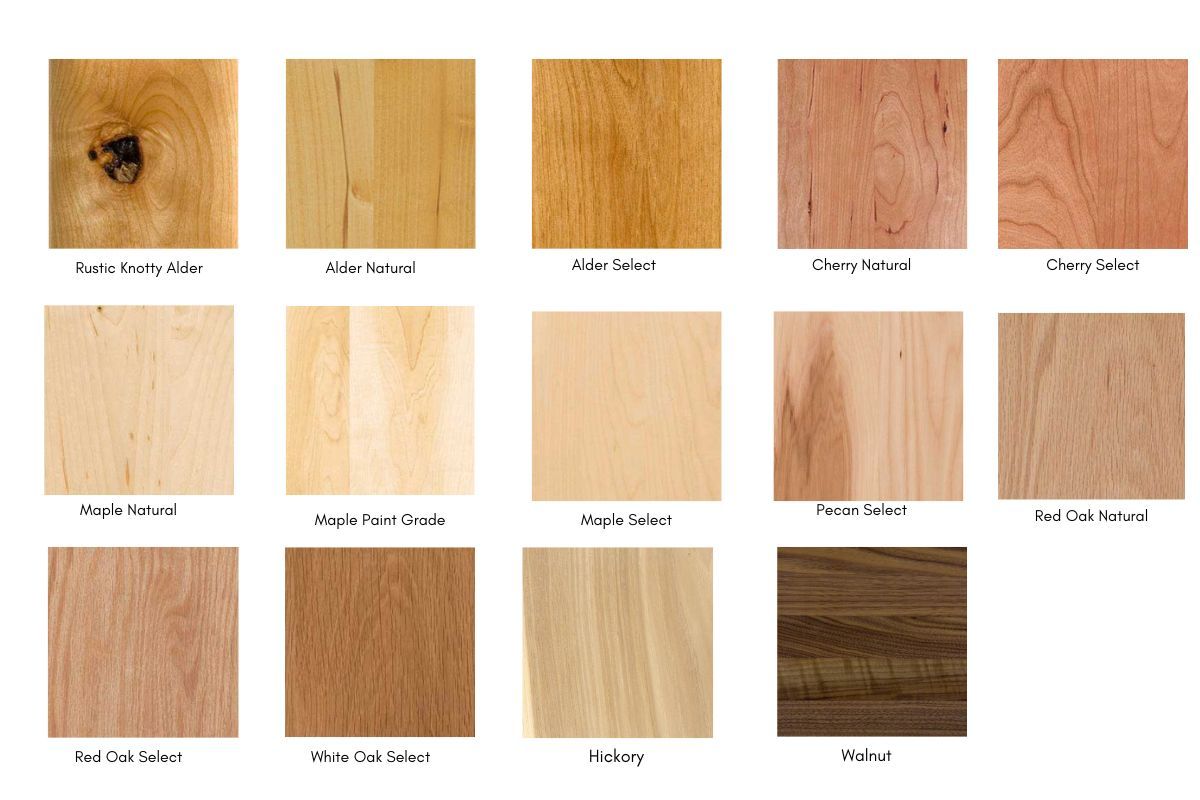
The species you choose also makes a difference.
White Oak has a Janka hardness rating of approximately 1,360, while Hickory is around 1,820. Both are commonly chosen when homeowners want a hardwood floor that can handle everyday wear.
By comparison, softer species can be more susceptible to dents. The Janka rating isn’t a guarantee against scratches. Any real wood floor can show wear, particularly in a busy household. It simply gives you a useful way to compare the relative hardness of different species.
Why Consider Engineered Hardwood?
Engineered hardwood has a real wood surface over a layered core. That construction can offer greater dimensional stability than solid hardwood, making it a popular option for installations over concrete slabs.
In DFW homes, proper preparation is particularly important. Your flooring professional should evaluate the slab and moisture conditions before installation.
Where Does It Fit Best?
Wire-brushed engineered hardwood works well for homeowners who want the warmth and character of genuine wood and are comfortable with some natural wear over time.
It’s a popular style for higher-end remodels and established neighborhoods such as Highland Park, Preston Hollow, and Fort Worth’s Tanglewood area.
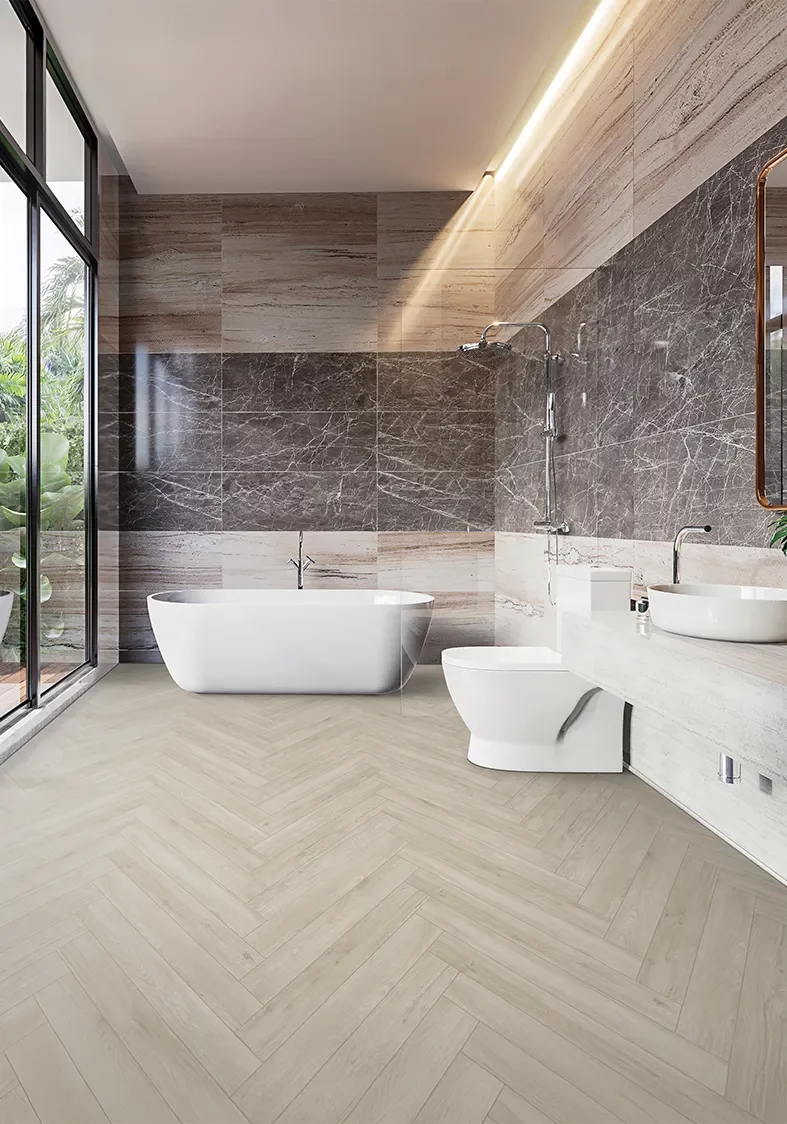
3. Porcelain Tile
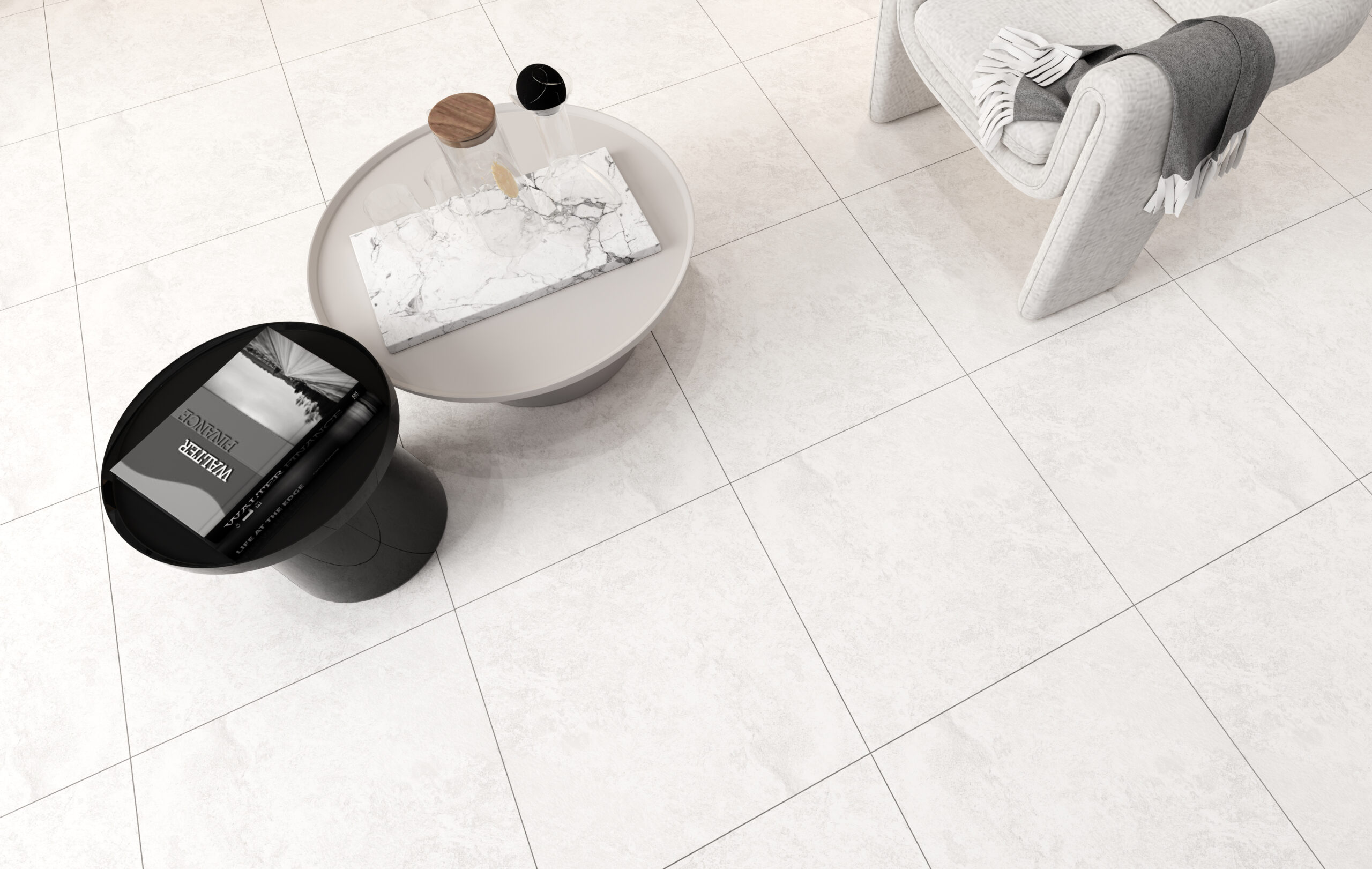
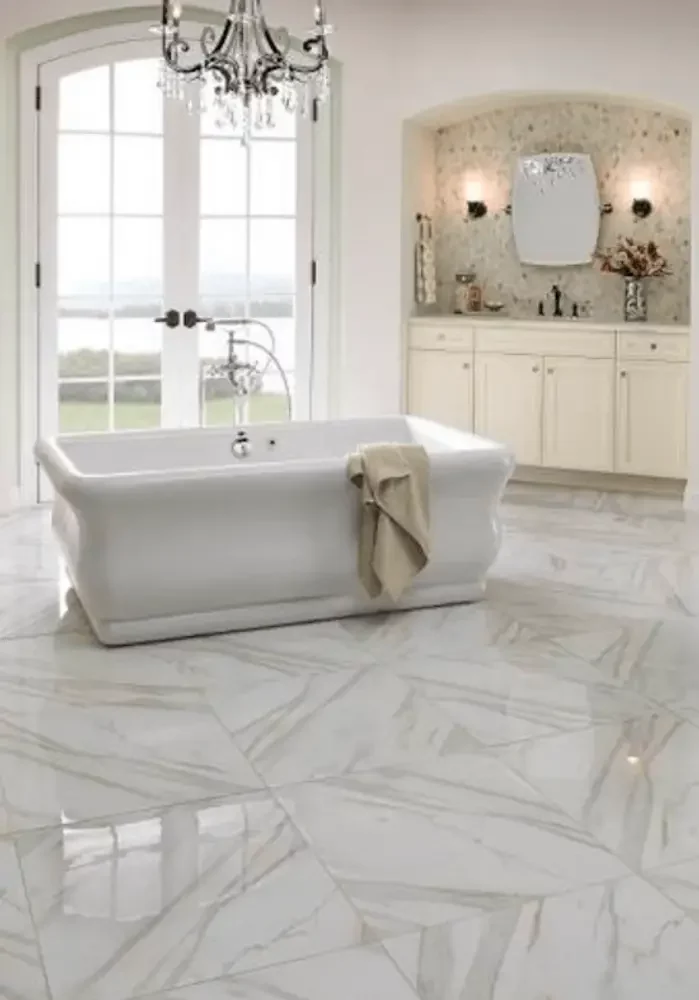
Porcelain is extremely hard and highly resistant to water and staining. Your dog’s claws aren’t going to scratch it in the same way they can scratch wood or other softer flooring materials.
It’s also easy to clean, which is a major benefit when muddy paws are part of your daily routine.
A Natural Choice for Texas Heat
There is one benefit your dog may appreciate even more than you do. Tile stays cool.
During a hot North Texas summer, many dogs naturally seek out cool flooring. Large-format porcelain can also create a clean, contemporary look, while wood-look porcelain gives youthe appearance of hardwood without the same concerns about scratches.
The Trade-Off
Porcelain is a hard surface. That isn’t necessarily a problem for a young, healthy dog, but older pets may appreciate having softer areas to rest. Tile can also be noisy when dogs run across it, and smooth surfaces can become slippery when wet.
A textured or slip-resistant finish, along with washable rugs in high-traffic areas, can make a tiled space more comfortable.
Don’t Forget Carpet
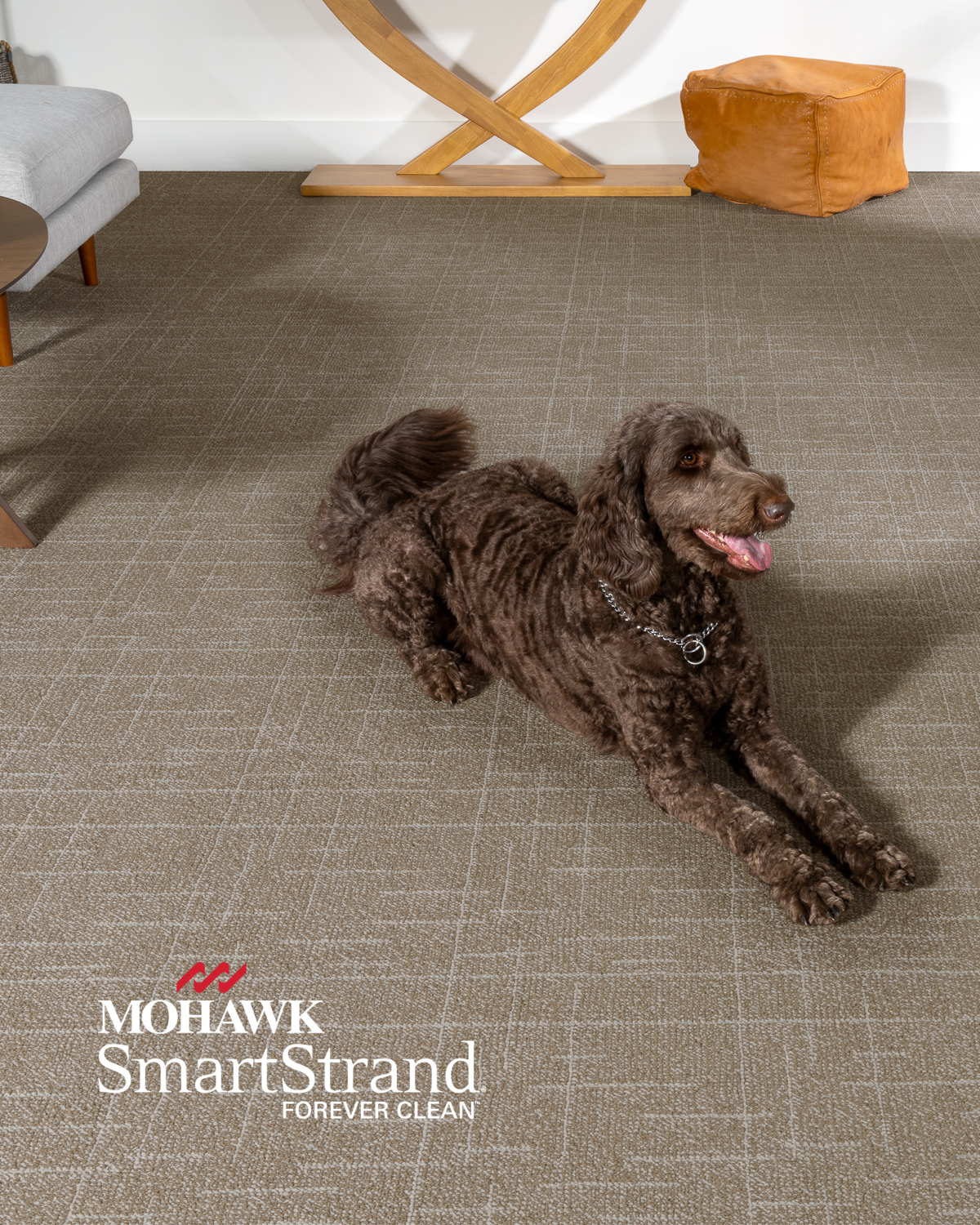
A house with pets doesn’t have to be entirely hard surface. Bedrooms are a good example. If your dog sleeps beside your bed every night, carpet may be a much more comfortable choice than porcelain or rigid flooring.
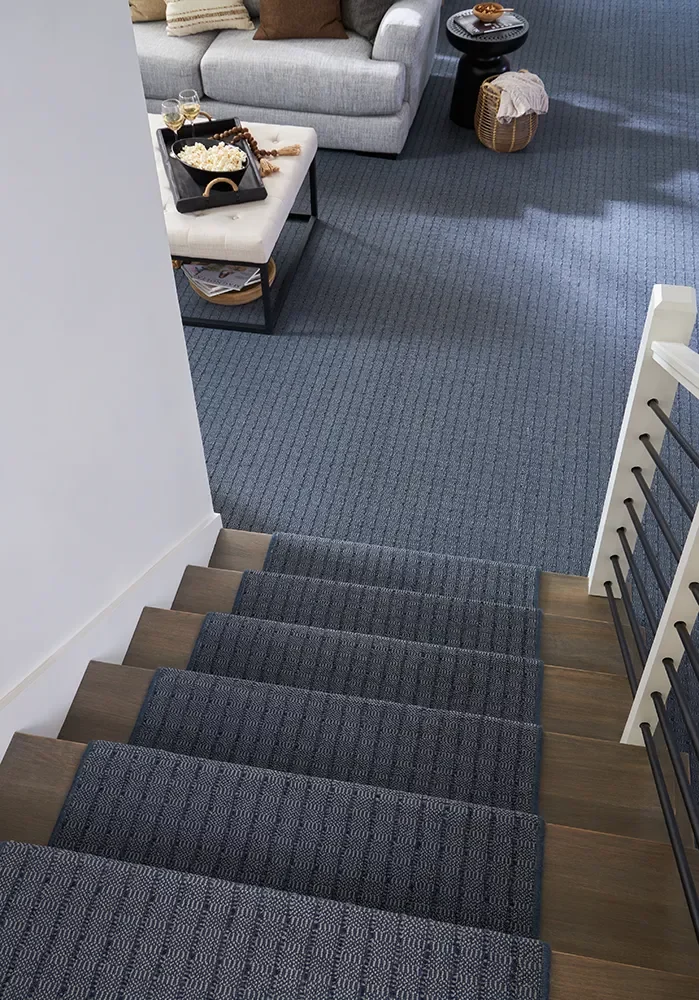
For pet owners who want carpet, our flooring design consultants recommend Mohawk PetPremier or Karastan smart strand carpet products. These carpet collections are designed for households with pets and include features intended to help with everyday stains and messes.
Pet carpet products are designed for everyday life with pets, featuring SmartStrand Triexta fiber made with renewable bio-based corn content, built-in resistance to spills and pet stains, Nanoloc protection that helps keep messes from soaking in, and select styles backed by an All Pet Protection Warranty.
That doesn’t mean you can ignore an accident and expect the carpet to take care of itself. No carpet should be treated that way. But choosing a product designed around the realities of pet ownership can make maintenance less stressful.
It’s also a reminder that different rooms have different requirements. You don’t need the toughest possible floor in a room where the primary activity is sleeping.
Don’t Ignore the Subfloor
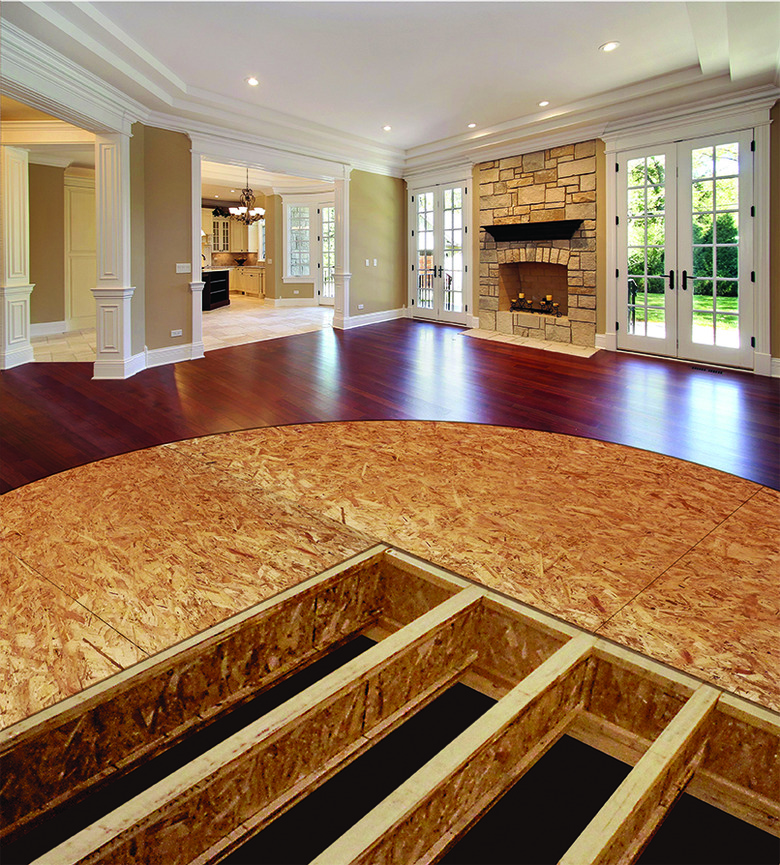
Choosing the flooring is only part of the project. Many DFW homes are built over concrete slabs, and the condition of that slab can affect the performance of the flooring installed above it.
North Texas clay soils can respond to changes in moisture, which is why proper preparation matters. Before installation, your contractor should evaluate the subfloor and check moisture conditions.
The appropriate preparation will depend on the flooring material, the existing slab, and the specific conditions of the home. It’s not the most exciting part of a flooring project, but it can be one of the most important.
Simple Ways to Protect Your Floor
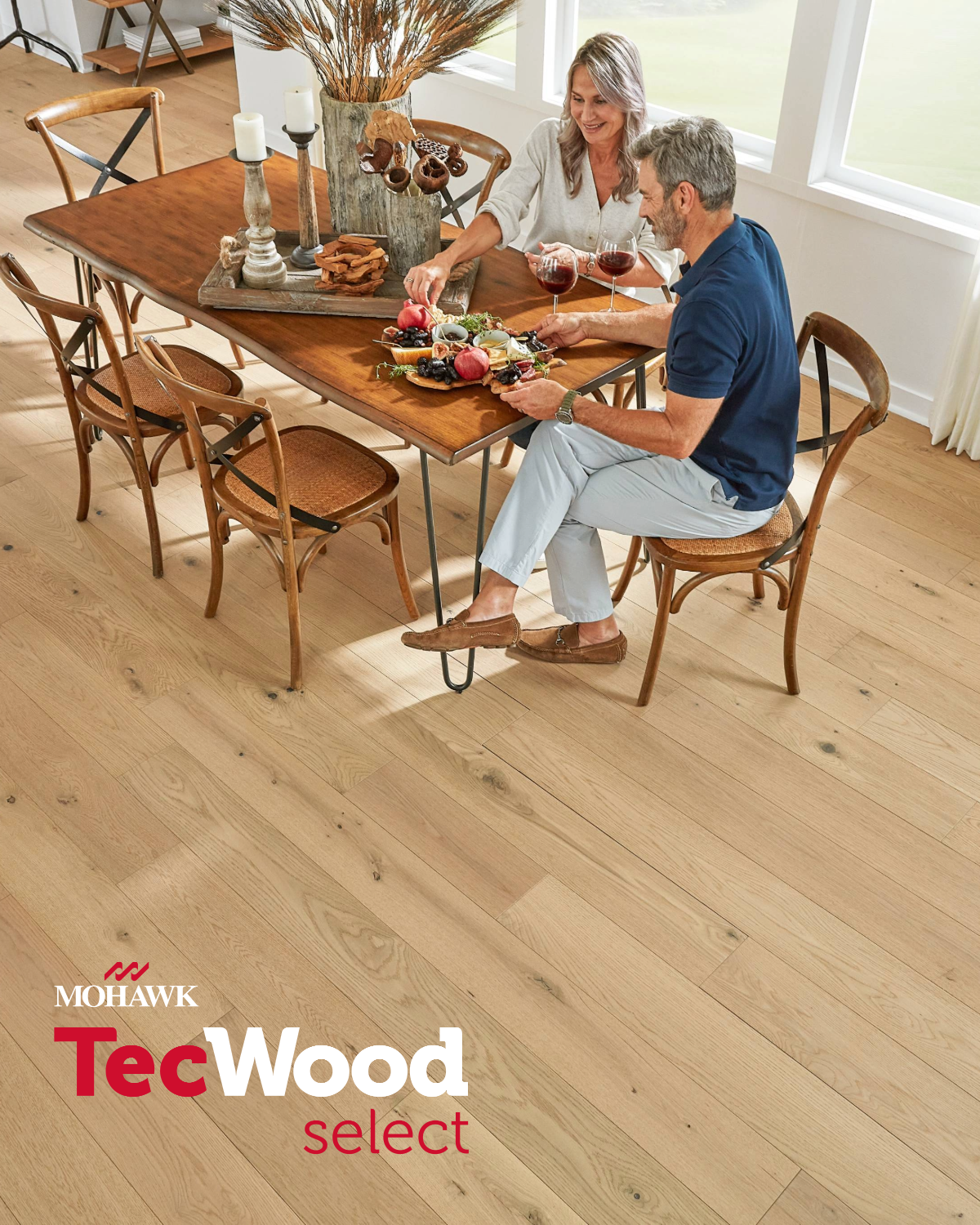
Even durable flooring needs maintenance. Keep your dog’s nails trimmed. This can reduce scratching and also makes the clicking sound of nails on hard surfaces less noticeable.
Use a waterproof or absorbent mat underneath water bowls. A few dollars spent on a good mat can save you from constantly wiping up spills.
Place a durable mat near exterior doors, particularly during rainy weather. North Texas storms can turn a clean entryway into a muddy one very quickly.
And when something does spill, clean it up. Even flooring designed to handle moisture doesn’t benefit from having water sit on it for long periods.
Frequently Asked Questions
What is the best flooring for a large dog?
It depends on what matters most to you. LVP and rigid-core SPC are popular because they’re easy to maintain and handle moisture well. Porcelain tile offers excellent resistance to scratches. Engineered hardwood is a good choice if you want genuine wood and are willing to choose the species and finish carefully.
Can a big dog scratch luxury vinyl plank?
Yes, although quality LVP is designed to handle substantial everyday wear. Look for a product with a strong wear layer, particularly if you have a large dog and a busy household. A 20-mil wear layer is a good starting point for comparison.
Is luxury vinyl really waterproof?
Many rigid-core vinyl products are designed to be waterproof, but the entire installation still matters. Seams, transitions, edges, and the subfloor all play a role. Standing water should still be cleaned up rather than left on the floor.
Can I have hardwood floors with a German Shepherd or other large dog?
Yes. Consider a harder wood species such as White Oak or Hickory, along with a wire-brushed surface and matte finish. These choices can make normal wear less noticeable.
Just keep in mind that real wood will develop some character over time. If you want a floor that never shows signs of use, hardwood may not be the right material.
What hardwood finish is best for dogs?
A matte or low-sheen finish is generally more forgiving than a high-gloss finish. Wire-brushed and hand-scraped surfaces can also help disguise small scratches because of the texture already present in the wood.
Is porcelain tile comfortable for dogs?
Porcelain doesn’t have much give, so it’s harder underfoot than vinyl or wood. Some dogs are perfectly comfortable on it, while older dogs may benefit from washable rugs or other softer areas.
The upside is that tile stays cool, which can be especially appealing during hot Texas summers.
What flooring is easiest to clean after muddy paws?
LVP, SPC, and porcelain tile are all relatively easy to clean. Your choice may come down to the appearance you want and how much you’re willing to maintain the floor over the long term.
Does the color of flooring matter if you have dogs?
It can.Very dark floors may make dust, pet hair, and scratches more visible. Very light floors can show mud and dirt.
Flooring with natural variation and a matte finish tends to be more forgiving of everyday pet activity.
Find the Right Flooring for Your DFW Home
Having a big dog doesn’t mean you have to sacrifice the look you want for your home. The trick is choosing materials that fit your lifestyle. Think about where your dog spends most of its time, how often your floors deal with water and mud, and whether your priority is easy maintenance, natural wood, or maximum resistance to wear.
At All American Flooring, we can help you compare flooring options in person and look at the differences between wear layers, wood species, textures, colors, and finishes.
Visit one of our DFW-area showrooms in Dallas, Allen or Lewisville, or schedule an in-home consultation. Seeing samples in your own home and lighting can make it much easier to decide what actually works for your space. A floor doesn’t need to be completely scratch-proof to be a good floor for a big dog. It needs to be durable enough for the way your family lives and installed correctly from the start.